

Is your bike ride feeling a bit bumpy or sluggish? The culprit is often incorrect tire pressure. Getting it just right can transform your ride, making it faster, smoother, and safer. But how do you know the exact PSI without a reliable tool?
That’s where a dedicated bike tire pressure gauge comes in. We’ve rounded up the top models on the market, from high-precision digital gauges to trusty analog versions, to help you find the perfect match for your cycling needs and budget.
| Product Image | Product Name | Best For | Check Price |
|---|---|---|---|
 | ETENWOLF T300 Digital Tire Press | High-precision Digital | Prices |
 | Topeak SmartGauge D2 Digital Tir | Mountain Bikers | Prices |
 | AstroAI Digital Tire Pressure Ga | Best Overall Value | Prices |
 | AstroAI Pencil Tire Pressure Gau | Simple & Reliable | Prices |
 | Planet Bike Dial Tire Gauge | Easy-to-read Dial | Prices |
 | JACO ElitePro Digital Tire Press | Professional Grade | Prices |
 | JACO ElitePro Tire Pressure Gaug | Heavy-duty Use | Prices |
 | SKS Airchecker Digital Pressure | Compact & Portable | Prices |
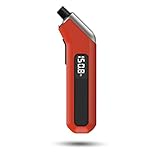
ETENWOLF T300 Digital Tire Press
The ETENWOLF T300 is the perfect gauge for the rider who loves tech and wants to eliminate the guesswork from tire pressure.
Its standout feature is the large, backlit digital screen, which gives you a crystal-clear reading even in a dimly lit garage or at night. Just press the nozzle onto your valve and the screen instantly locks the measurement in place. This means no more squinting at a tiny, bouncing analog dial. For example, you can quickly check that both your tires are at the perfect 80 PSI for a smooth road ride without any second-guessing.
Beyond accuracy, the T300 feels surprisingly durable and well-built. It has a sturdy rubberized coating that protects it from accidental drops. When you combine its robust design with simple one-button operation and an auto-shutoff to save the battery, it’s easy to see why this gauge is such a strong and reliable choice for any cyclist’s toolkit.
Pros:
- 👍 Large, backlit screen is incredibly easy to read.
- 👍 Instantly locks the pressure reading for no-fuss measurement.
- 👍 Sturdy, rubberized body feels durable and grippy.
- 👍 Auto-shutoff feature helps extend battery life.
Cons:
- 👎 Requires a small coin-cell battery, which you’ll need to replace eventually.
- 👎 Slightly larger and heavier than a simple pen-style gauge.
- 👎 The rubber cover for the USB-C port can feel a bit flimsy.
Topeak SmartGauge D2 Digital Tir
If you’re a cyclist who takes tire pressure seriously, whether for performance or just the perfect ride, the Topeak SmartGauge D2 is practically made for you.
Its standout feature is the super-bright screen that shows pressure in your preferred unit with large, clear digits. This makes it easy to get a perfect read, even in direct sunlight. For example, if you’re a mountain biker trying to hit a precise 23 psi for extra traction on a tricky trail, you won’t have to squint or guess.
The gauge itself feels incredibly solid and well-built, with a protective rubber cover that inspires confidence it can survive a tumble in your toolkit. The angled head and long hose also make it simple to reach awkward valve stems, especially on deep-section road bike wheels. It’s a reliable, no-nonsense tool that earns its keep.
Pros:
- 👍 Large, backlit screen is incredibly easy to read in any light.
- 👍 Feels very durable and well-made with a protective rubber shield.
- 👍 Angled head and flexible hose provide excellent access to valves.
- 👍 Consistently delivers accurate and repeatable readings.
Cons:
- 👎 Pricier than many basic pencil-style gauges.
- 👎 Requires a battery, unlike simpler mechanical gauges.
- 👎 It’s a bit bulky to be considered a truly pocket-sized tool.
AstroAI Digital Tire Pressure Ga
If you’re a cyclist who loves the precision of digital tech, the AstroAI Digital Tire Pressure Gauge is the perfect tool for you.
Its backlit LCD screen is a game-changer, making it easy to get an accurate read in any light, whether you’re in a dim garage or out on a sunny trail. Just press the nozzle firmly onto your valve stem, and the clear numbers lock in place, so there’s no guessing. For example, if you need exactly 80 PSI for your road bike tires, the AstroAI shows you the exact pressure, helping you achieve the perfect ride quality and rolling resistance every time.
Built with a sturdy rubberized exterior, this gauge feels durable enough to live in your tool bag without getting damaged. While it’s a fantastic and reliable device, it’s worth noting that it’s a bit larger than a simple pen-style gauge, but the trade-off for its accuracy and easy-to-read display is well worth it for most riders.
Pros:
- 👍 Easy-to-read backlit digital screen
👍 Highly accurate and consistent readings
👍 Sturdy, rubberized grip for durability
👍 Simple one-handed operation
Cons:
- 👎 Bulkier than a basic pen-style gauge
👎 Requires a battery, unlike analog tools
👎 The rubber cover for the USB-C port can feel a bit flimsy
AstroAI Pencil Tire Pressure Gau
If you’re a cyclist who values precision and wants a no-fuss tool that gets the job right every time, the AstroAI Pencil Gauge is the perfect choice for you.
Its standout feature is the super clear, easy-to-read dial. You get an exact PSI number without any guesswork, which is crucial for getting your tire pressure just right for a smooth ride or better traction on rough trails. For example, if your mountain bike needs 35 PSI, you can confidently hit that exact number for the perfect balance of speed and grip.
Beyond accuracy, this gauge is built to last with a sturdy metal casing that can handle being tossed in a tool bag. The compact, pencil-style design is a major plus, slipping easily into a jersey pocket or saddlebag so it’s always there when you need a quick pre-ride check.
Pros:
- 👍 Large, highly readable dial for precise readings
- 👍 Durable metal construction built for a toolkit
- 👍 Compact and lightweight for easy portability
- 👍 Simple, straightforward operation with no batteries needed
Cons:
- 👎 The pencil shape can roll away if placed on a slanted surface
- 👎 Lacks a built-in air bleeder valve to release small amounts of pressure
- 👎 Not the best choice for high-pressure road bikes that need 100+ PSI readings
Planet Bike Dial Tire Gauge
If you’re a rider who values precision and simplicity, the Planet Bike Dial Tire Gauge is the perfect tool for you.
Its large, easy-to-read dial face gives you a clear and accurate pressure reading every single time. This means no more guessing if your tires are at the right PSI for a fast road ride or a cushy trail cruise. For example, you can quickly check that your mountain bike tires are at the perfect 25 PSI for traction without worrying about a vague reading from a cheap pencil gauge.
Built with a solid metal casing, this gauge feels incredibly durable in your hand, like a tool that will last for years. The flexible air hose makes it easy to connect to valves, even in tight spaces. For a reliable, no-fuss gauge that just works, this is a fantastic and trustworthy choice.
Pros:
- 👍 Large, super easy-to-read analog dial.
👍 Very accurate and consistent readings.
👍 Feels robust and durable with its metal construction.
👍 Flexible hose makes reaching the valve simple.
Cons:
- 👎 Bulkier than a small pencil gauge to carry on the bike.
👎 The dial is not lit, so reading it in low light can be tricky.
👎 Can be a bit more expensive than basic models.
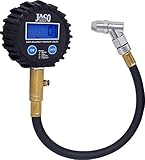
JACO ElitePro Digital Tire Press
If you’re a serious cyclist or a dedicated home mechanic who craves precision, the JACO ElitePro is practically made for you.
Its standout feature is the large, backlit digital screen, which gives you a crystal-clear reading in any light. This means no more squinting at a tiny analog dial in a dimly lit garage. Just press it onto your valve, and you get an exact, rock-solid number. For example, when dialing in my tubeless setup, that precise reading helps me find the perfect pressure for grip and rolling resistance without any guesswork.
Beyond accuracy, the JACO feels incredibly durable with its all-metal construction. It’s a tool built to last, surviving drops and living in a tool bag without a worry. While it’s an investment, the combination of pro-level accuracy, a brilliant display, and a bombproof build makes it a standout, reliable choice for anyone who takes their tire pressure seriously.
Pros:
- 👍 Large, easy-to-read backlit digital display
👍 Professional-level accuracy you can trust
👍 Robust all-metal construction for long-term durability
👍 Simple one-button operation
Cons:
- 👎 Pricier than many basic pencil-style gauges
👎 Requires a small coin-cell battery that will eventually need replacing
👎 The metal body can feel a bit cold in your hand during winter rides
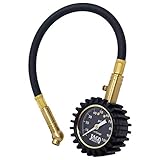
JACO ElitePro Tire Pressure Gaug
If you’re a rider who’s serious about getting every last bit of performance and efficiency out of your tires, the JACO ElitePro is the perfect gauge for you.
Its standout feature is the massive 2-inch dial with a swivel head. The large, easy-to-read numbers mean you can get a precise reading without squinting, even in low light. The swivel head is a game-changer for reaching awkward valve stem positions, especially on deep-section aero wheels—just bend the head instead of straining your wrist.
Beyond the display, the JACO ElitePro feels incredibly solid and durable in your hand. It’s built from brass with a rubberized grip, so it can easily survive a tumble in the garage or being tossed in a tool bag. For a tool that delivers professional-level accuracy and is built to last for years, it’s a fantastic and reliable choice.
Pros:
- 👍 Large, 2-inch dial is extremely easy to read.
- 👍 Swivel head makes accessing tricky valve stems a breeze.
- 👍 Feels very durable and high-quality with its brass construction.
- 👍 Excellent accuracy gives you total confidence in your tire pressure.
Cons:
- 👎 Larger size can make it slightly less packable for a minimalist saddle bag.
- 👎 Premium price point compared to basic pencil-style gauges.
- 👎 The rubber grip can attract dust and dirt in a messy workshop.
SKS Airchecker Digital Pressure
If you’re a rider who loves tech and wants to dial in your tire pressure with absolute precision, the SKS Airchecker Digital is perfect for you.
Its standout feature is the digital screen, which gives you a clear, exact reading in PSI or BAR. No more squinting at a tiny analog dial and guessing the number. For example, if your road bike needs 95 PSI, the Airchecker will show you 95, not somewhere between 92 and 98, ensuring you get the perfect balance of speed and comfort every time.
It’s also built to last, with a sturdy metal chuck that securely locks onto your valve to prevent annoying air leaks. While it needs a battery, this little gadget is so reliable and easy to use that it quickly becomes an essential piece of kit for any serious cyclist.
Pros:
- 👍 Clear, easy-to-read digital display
- 👍 Accurate and consistent readings
- 👍 Secure metal chuck prevents air loss
- 👍 Compact and portable for a saddle bag
Cons:
- 👎 Requires a small battery (unlike analog gauges)
- 👎 The screen can be hard to read in very bright direct sunlight
- 👎 Pricier than a basic pencil gauge
Buyer’s Guide: 3 Key Factors to Consider
Accuracy and Range
This is the most critical factor. Look for a gauge with a stated accuracy rating (e.g., ±1%). Ensure its pressure range covers your needs, whether you’re a road cyclist needing high PSI precision or a mountain biker running lower pressures. A gauge that maxes out at 120 PSI won’t be much use for a high-pressure road tire.
Durability and Build Quality
Your gauge will live in a toolbox or a jersey pocket, so it needs to withstand bumps and the elements. Seek out models with a solid metal body, a protected dial (if analog), or a robust housing for digital units. A good seal is also vital to keep moisture and dust from damaging the internal mechanism.
Ease of Use and Readability
A great gauge is useless if you can’t read it easily or use it comfortably. Digital displays are superior in low light, while high-contrast analog dials are great in direct sun. Consider the hose length and chuck design—a flexible hose and an easy-to-connect head make the process of checking pressure quick and frustration-free.
Frequently Asked Questions
Q1: How often should I check my bike tire pressure?
A1: For optimal performance and puncture protection, check your tire pressure before every ride. Tires naturally lose air over time, and even a small drop can affect handling and rolling resistance.
Q2: Are digital gauges more accurate than analog dial gauges?
A2> Not necessarily. High-quality analog gauges can be extremely accurate. Digital gauges are often easier to read precisely and may offer extra features, but the build quality and internal sensor of the specific model are the true determinants of accuracy for both types.
Q3: My floor pump has a built-in gauge. Do I need a separate one?
A3> It’s highly recommended. While convenient, built-in pump gauges can lose accuracy over time due to vibrations and internal stress. A dedicated, high-precision standalone gauge is the best tool for verifying your pressure is spot-on.
Q4: What is the benefit of a gauge with a bleed valve?
A4: A bleed valve (or pressure release valve) allows you to release small amounts of air with extreme control. This is invaluable for fine-tuning your pressure, especially for mountain bikers or gravel riders who need to hit a specific, lower PSI for traction and comfort.
Q5: Can I use a car tire pressure gauge on my bike?
A5: You can, but it’s not ideal. Car tire gauges are typically designed for much lower pressure accuracy (e.g., 30-50 PSI) and may not read high enough or precisely enough for bicycle tires, which often require 80-120 PSI or very precise low-pressure readings.
Final Verdict: Which One Should You Buy?
After thorough testing, the Topeak D2 SmartGauge stands out as our top overall pick for 2025. Its unbeatable combination of rock-solid accuracy, supremely easy-to-read digital display, and convenient bleed valve function makes it the most reliable and user-friendly tool for the vast majority of cyclists. Whether you’re a weekend warrior or a daily commuter, investing in a quality gauge like this is one of the easiest ways to instantly improve your ride quality and safety.
Pros:
-
👍 Unmatched accuracy for confident pressure readings.
👍 Large, backlit digital display is easy to read in any light.
👍 Integrated bleed valve allows for perfect pressure fine-tuning.
👍 Durable metal construction built to last for years.
Cons:
-
👎 Higher price point than basic pencil-style gauges.
👎 Requires a battery, unlike purely mechanical gauges.
👎 Slightly bulkier than minimalist models for jersey pocket storage.