

Ever step outside and wonder if your tires are underinflated or overfilled? Incorrect tire pressure hurts fuel economy, shortens tire life, and can even make driving unsafe. Yet checking pressure shouldn’t be a chore or require a trip to the shop.
This guide reviews the best car tire gauges you can buy today. We cover pocket-friendly models, workshop-grade tools, and reliable digital options. Read on to find the right gauge for quick roadside checks or professional use.
| Product Image | Product Name | Best For | Check Price |
|---|---|---|---|
 | AstroAI Digital Tire Pressure Ga | Everyday Accuracy | Prices |
 | ETENWOLF Digital Tire Pressure G | Durable Workshop Use | Prices |
 | AstroAI Pencil Tire Pressure Gau | Pocket-sized Convenience | Prices |
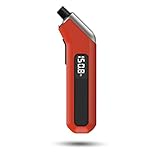 | ETENWOLF T300 Digital Tire Gauge | High-precision Readings | Prices |
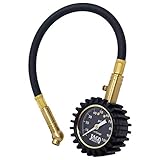 | JACO ElitePro Tire Pressure Gaug | Professional Mechanics | Prices |
 | Universal Analog Tire Pressure G | Best Budget Option | Prices |
AstroAI Digital Tire Pressure Ga
This digital gauge is perfect for drivers who want a fast, accurate, and easy-to-read tool for routine tire checks.
It offers a bright backlit LCD and a wide pressure range, delivering quick, consistent readings in seconds. The angled chuck and ergonomic grip help you get a tight seal without struggling. For example, before a long highway trip you can check and top off all four tires in under a minute, even when it’s dark in the morning or late at night.
The unit feels solid enough for regular use and stores easily in a glove box. Auto-shutoff preserves battery life, and the compact footprint keeps it handy for roadside checks. Between the readable display, fast response, and simple handling, it’s a practical, no-nonsense choice for most car owners.
Pros:
- 👍 Bright backlit LCD for easy reading in low light
- 👍 Fast, consistent readings that save time during checks
- 👍 Angled chuck and rubber grip for a secure seal and easy use
- 👍 Compact design that fits in a glove box or toolkit
Cons:
- 👎 Requires batteries, which may not be included
- 👎 Plastic housing is less rugged than some all-metal gauges
- 👎 May need a firm reseat to prevent brief pressure bleed while measuring
ETENWOLF Digital Tire Pressure G
Ideal for everyday drivers who want a quick, accurate digital gauge that’s simple to use at home or on the road.
This gauge offers a clear backlit LCD and fast, reliable readings in multiple units (psi, kPa, bar). In practice that means you can walk around your car, press the chuck on each valve, and get a stable reading in seconds—handy when you need to top tires to a specific 35 psi before a trip.
It’s compact, feels solid in hand, and includes a swivel metal chuck that helps reach awkward valve stems. Long battery life and an auto-off feature keep it ready when you need it. For a small, accurate digital tool, it’s a strong choice for routine tire care.
Pros:
- 👍 Fast, accurate digital readings for reliable inflation checks
- 👍 Backlit display makes night or low-light checks easy
- 👍 Swivel metal chuck reaches tight valve stems without fuss
- 👍 Compact, durable build with long battery life
Cons:
- 👎 Display can be small for users with poor eyesight
- 👎 No pressure hold feature on some readings, so you must read quickly
- 👎 Plastic housing may show wear if dropped frequently
AstroAI Pencil Tire Pressure Gau
Perfect for drivers who want a quick, pocketable tool for routine tire pressure checks.
The pencil-style gauge gives fast, direct readings with a simple pop-out piston you read against marked numbers, so you see pressure the moment it contacts the valve. It fits most standard valve stems and works without batteries, letting you check all four tires in a few minutes before a commute or a long trip.
It’s battery-free, small enough to clip in a glovebox or pocket, and built with metal to handle everyday knocks. The straightforward design keeps maintenance low, and the low price makes it an easy add to your car kit—solid value for drivers who want a reliable, no-fuss gauge.
Pros:
- 👍 Extremely compact and pocketable for on-the-go checks.
- 👍 Battery-free operation—always ready when you need it.
- 👍 Fast, easy-to-read mechanical readings for routine use.
- 👍 Sturdy metal build and good value for the price.
Cons:
- 👎 Small size can be fiddly for users with large hands.
- 👎 Mechanical gauges can be a touch less precise than lab-grade tools.
- 👎 Requires a steady hand and good valve seal for the best reading.
ETENWOLF T300 Digital Tire Gauge
Perfect for drivers who want a fast, easy, and reliable way to check tire pressure at home or on the road.
The standout features are a clear digital readout and a bright backlit screen, which make readings quick and readable in any light. In practice, you can spot a low tire in seconds and top it up with a portable pump before a commute, avoiding poor handling or mileage loss.
Build quality and ergonomics matter too — the compact body, secure chuck, and rubber grip feel sturdy and are easy to use one-handed. Reliable battery life and an auto-off feature help it stay ready in the glovebox, making it a smart, low-fuss choice for regular tire maintenance.
Pros:
- 👍 Fast, easy-to-read digital display for quick checks
- 👍 Backlit screen works well in low light or at night
- 👍 Compact and ergonomic — easy to store and use one-handed
- 👍 Sturdy build with a secure chuck for leak-free readings
Cons:
- 👎 Requires batteries, so keep spares on hand
- 👎 No integrated inflation hose — you’ll need a separate pump
- 👎 Screen visibility can be reduced in very bright sunlight
JACO ElitePro Tire Pressure Gaug
The JACO ElitePro Tire Pressure Gaug is perfect for drivers and DIYers who want a fast, accurate, and easy-to-read tool for routine tire checks.
It features a large, easy-to-read analog dial and a precision chuck with a built-in bleeder valve. That means you can read pressure at a glance and release small amounts of air without guessing. For example, if your tire reads 37 psi and the recommended is 35 psi, you can back it down precisely.
Build quality stands out — solid metal construction and a chrome finish make it durable for garage or roadside use. The no-battery design and ergonomic grip keep it simple and reliable. Overall, it’s a practical, long-lasting choice for most passenger cars and light trucks.
Pros:
- 👍 Large, easy-to-read dial for quick checks
- 👍 Built-in bleeder valve for precise pressure adjustments
- 👍 Rugged metal construction that resists wear
- 👍 No batteries required—reliable anytime
- 👍 User-friendly chuck makes attaching quick and secure
Cons:
- 👎 Bulkier than slim pen-style digital gauges
- 👎 Dial can be harder to read in very low light without a lighted option
- 👎 0–60 psi range may not cover very high-pressure specialty tires
Universal Analog Tire Pressure G
This gauge is perfect for drivers who want a simple, reliable analog tool to check tire pressure at home or on the road.
It has a large, easy-to-read dial and a universal chuck that fits most valve stems. That means you get a quick reading without batteries. For example, you can push it onto a cold tire at the gas station and see the pressure instantly, then decide whether to add air or stop there.
The metal body and rubber guard make it tough enough for the glove box or toolbox. It also holds calibration well, so readings stay consistent over time. If you want a low-cost, durable gauge that’s straightforward to use, this is a strong choice.
Pros:
- 👍 Large, easy-to-read analog dial for fast readings
- 👍 Universal chuck fits most tire valves
- 👍 No batteries required — always ready
- 👍 Durable metal body with rubber guard
Cons:
- 👎 Not as precise as high-end digital gauges for decimals
- 👎 Dial can be harder to read in very low light
- 👎 Requires occasional calibration to maintain accuracy
Buyer’s Guide: 3 Key Factors to Consider
A standout trend in 2025 is smart connectivity — tire gauges with Bluetooth and companion apps. These let you log pressures over time, set alerts for low PSI, and share data with a mechanic. If you maintain multiple vehicles or track tire wear closely, a connected gauge adds real convenience and helps catch slow leaks before they become problems.
Durability and design matter more than ever. Look for metal chucks, reinforced hoses, and an IP rating (water/dust resistance) if you store the gauge in a garage or trunk. Ergonomic grips, a bright backlit display, and an angled chuck make quick roadside checks easier and safer, especially in low light or cold weather.
Combined, accuracy, durability, and useful features make modern digital gauges a strong choice for most drivers. Prioritize a gauge with a verified accuracy spec (±1–2 PSI), easy calibration or serviceability, and reliable battery life — that balance will give you long-term value whether you’re a daily commuter or a weekend enthusiast.
Pros:
- 👍 Accurate, repeatable readings (many models ±1–2 PSI) for safer tire maintenance.
- 👍 Bluetooth/app integration for logging, alerts, and fleet management convenience.
- 👍 Rugged construction options (metal chuck, IP-rated cases) for long life.
- 👍 Quick, easy-to-read displays and ergonomic chucks make roadside use simple.
Cons:
- 👎 Smart gauges cost more than basic analog options — consider if you need the extras.
- 👎 Some Bluetooth apps vary in quality; check reviews for reliable software.
- 👎 Battery replacement or calibration may be occasional maintenance to factor in.
Accuracy & Calibration
Choose a gauge with a stated accuracy (look for ±1–2 PSI). Test it against a trusted shop gauge when new and after long storage. If you need precision for performance driving or heavy loads, prioritize a model with calibration options or a known reputable brand.
Ease of Use
Pick a gauge with an angled or flexible chuck, a clear backlit display, and a quick-release valve. These features speed up checks and reduce air loss while reading. If you check tires in the dark, a bright display or built-in light is worth the small extra cost.
Price vs. Performance
For occasional drivers, a reliable analog gauge can be plenty. If you track pressure frequently, manage multiple vehicles, or value data logging, invest in a mid-range digital or Bluetooth model — it pays off in convenience and better tire life.
Frequently Asked Questions
Q1: Digital or analog — which is better?
A1: Digital gauges are easier to read and often more accurate; analog gauges are cheaper and durable. Choose digital for frequent checking and precision, analog for simple occasional use.
Q2: How often should I check tire pressure?
A2: Check at least once a month and before long trips. Also check when temperatures change significantly, as PSI can shift ~1 PSI per 10°F.
Q3: How can I tell if a gauge is accurate?
A3: Look for a stated accuracy spec (±1–2 PSI). Cross-check with a shop-quality gauge or at a tire shop when new; repeatability on successive reads is a good sign.
Q4: Will any gauge work with my valve stems?
A4: Most gauges fit standard Schrader valves used on cars. If you have a specialty valve (e.g., some motorcycles or older vehicles), confirm compatibility or use an adapter.
Q5: Do Bluetooth gauges help with TPMS issues?
A5: They don’t replace TPMS sensors, but Bluetooth gauges help by logging pressures to spot trends and slow leaks that TPMS alerts might not catch until pressure is very low.
Q6: How long do digital gauge batteries last?
A6: Battery life varies; many last months to years depending on use. Look for models with auto-shutoff and replaceable batteries, or rechargeable options for frequent users.
Final Verdict: Which One Should You Buy?
For most drivers in 2025, a rugged digital gauge with verified ±1–2 PSI accuracy and Bluetooth logging is the best all-around pick — ideal for commuters, fleet owners, and car enthusiasts who want convenience and data. If you only check pressure occasionally, a simple analog gauge still offers reliable, budget-friendly performance.