

Is your car sputtering, stalling, or running rough and you don’t know why? Many drivability problems come down to fuel pressure. A quick pressure check can show whether the pump, regulator, or injectors are underperforming — saving time and expensive parts swapping.
This guide reviews the best fuel pressure gauges and tester kits for home mechanics and shops. You’ll get clear pros and cons, who each tool suits best, and an easy comparison table to help you pick the right gauge for your needs.
| Product Image | Product Name | Best For | Check Price |
|---|---|---|---|
 | 0-140 PSI Fuel Pressure Tester K | Wide Psi Range | Prices |
 | SENCTRL 0-100 PSI Fuel Pressure | Best For Precision | Prices |
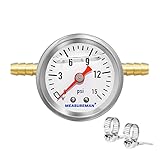 | MEASUREMAN Complete Fuel Pressur | All-in-one Kit | Prices |
 | Marshall Instruments LBB00100 Fu | Professional Accuracy | Prices |
 | MEASUREMAN 1-1/2 Inch Fuel Press | Small Engine Use | Prices |
 | BETOOLL 0-140 PSI Fuel Injector | Injector Testing Tool | Prices |
0-140 PSI Fuel Pressure Tester K
This fuel pressure tester is perfect for DIY mechanics and pros who need a durable, wide-range gauge for diagnosing fuel systems.
It offers a 0–140 PSI range and comes with multiple quick-connect adapters. That range covers most cars and light trucks, so you can test fuel pump output accurately. For example, if a pump should produce about 40 PSI but the gauge shows 25 PSI, you’ve found a clear fault to fix. The quick fittings make hookup fast and reduce fuel spills.
The kit also feels rugged. Brass fittings and a reinforced hose stand up to shop use. The dial is large and easy to read, even under dim lighting. It includes adapters and a simple storage pouch, so you get versatility and portability. Overall it’s a practical, reliable tool for routine diagnostics and occasional heavy use.
Pros:
- 👍 Wide 0–140 PSI range covers most vehicles
- 👍 Includes multiple adapters for fast hookup
- 👍 Large, easy-to-read dial for quick diagnosis
- 👍 Sturdy construction with brass fittings
Cons:
- 👎 Hose can be stiff in cold weather
- 👎 No digital readout for logged readings
- 👎 Gauge may need occasional calibration
SENCTRL 0-100 PSI Fuel Pressure
Ideal for DIY mechanics and professional tuners who need an affordable, reliable tool to diagnose fuel-system issues on cars and light trucks quickly and accurately.
The SENCTRL 0-100 PSI gauge offers a wide measurement range and a clear, easy-to-read dial so you can spot under- or over-pressure at a glance. Its responsive needle and solid calibration make it simple to confirm problems— for example, if an engine stumbles at idle you can measure pressure drop immediately to determine whether the pump or a clogged filter is the culprit. A straightforward hookup speeds testing and reduces guesswork in the garage.
Build quality is practical and workshop-ready, with a compact profile and protective boot to resist knocks. The unit feels sturdy in hand and is simple to store in a toolbox. For anyone wanting a no-nonsense analog gauge that covers most passenger vehicle needs, this is a strong, cost-effective choice.
Pros:
- 👍 Wide 0–100 PSI range covers most gas and light-duty diesel systems.
- 👍 Clear, responsive dial for quick diagnosis.
- 👍 Solid, workshop-ready construction with protective boot.
- 👍 Fast hookup saves time during testing.
Cons:
- 👎 Analog readout lacks digital precision for logging.
- 👎 May require additional adapters for some specialty fittings.
- 👎 Not designed for continuous monitoring over long periods.
MEASUREMAN Complete Fuel Pressur
This kit is perfect for DIY mechanics and professional technicians who want a simple, all‑in‑one tool to diagnose fuel system problems quickly and accurately.
It pairs a clear, easy‑to‑read analog gauge with a wide set of quick‑connect adapters so you can hook up to most gasoline systems without hunting for parts. The practical benefit is fast troubleshooting — for example, if pressure drops while cranking the engine, you can pinpoint a weak pump instead of replacing other components blindly.
Build quality is solid with sturdy hoses, metal fittings, and a molded carry case that keeps everything organized. The protective boot around the gauge reduces the chance of damage on the shop floor. Overall, this kit is user‑friendly, durable, and a sensible choice for routine fuel pressure checks.
Pros:
- 👍 Comprehensive adapter set covers most vehicles and makes hookups fast.
- 👍 Clear, easy‑to‑read gauge for quick diagnostics without guesswork.
- 👍 Sturdy hoses and protective boot improve durability in a busy garage.
- 👍 Compact molded case keeps tools organized and portable.
Cons:
- 👎 Analog gauge is less precise than some digital options if you need exact decimals.
- 👎 Instructions could be clearer for first‑time users; basic mechanical knowledge helps.
- 👎 May not include specialty fittings for some older or rare vehicles.
Marshall Instruments LBB00100 Fu
Perfect for DIY mechanics and tuners who want a straightforward, reliable fuel pressure gauge for quick diagnostics and routine checks.
The Marshall Instruments LBB00100 Fu stands out for its clear, easy-to-read dial and steady needle movement, which makes spotting pressure drops simple. It also installs quickly with common fittings, so you can test fuel pressure at idle and under throttle without fuss—for example, watching for a sudden fall when the pump struggles under load.
Build quality is solid, with a sealed face and compact design that holds up in the garage. It won’t impress with bells and whistles, but its accuracy, durability, and value make it a strong choice for most users who need dependable readings without paying extra for features they won’t use.
Pros:
- 👍 Clear, easy-to-read dial for fast diagnostics
- 👍 Stable needle movement reduces false readings from vibration
- 👍 Durable, sealed construction for garage use
- 👍 Simple installation with common fittings
Cons:
- 👎 No digital display or backlight for low-light work
- 👎 Limited advanced features for high-end tuning setups
- 👎 May need periodic calibration for long-term precision
MEASUREMAN 1-1/2 Inch Fuel Press
Ideal for DIY mechanics and professional technicians who need a compact, reliable fuel pressure gauge for both bench checks and on-vehicle diagnostics.
The 1-1/2 inch dial is easy to read and has clear markings that make spotting pressure changes fast and simple. Its responsive movement lets you see drops or spikes as you prime the pump. For example, when adjusting a regulator or testing a replacement pump, you can quickly confirm whether pressure holds steady under load.
Build quality leans toward practical durability with a metal case and corrosion-resistant internals that stand up to garage use. It uses a common fitting for broad compatibility and its small footprint fits tight engine bays. Overall, it’s a solid, affordable option when you want straightforward, dependable fuel pressure readings without extra bells and whistles.
Pros:
- 👍 Compact 1-1/2″ dial that fits tight spaces
- 👍 Clear, easy-to-read face for quick diagnostics
- 👍 Responsive movement helps spot real-time pressure changes
- 👍 Sturdy construction and good value for the price
Cons:
- 👎 Small dial can be harder to read from a distance
- 👎 Not a digital unit, so no logging or exact decimals
- 👎 May require an adapter for uncommon fittings
BETOOLL 0-140 PSI Fuel Injector
Perfect for DIY mechanics and shop technicians who want a simple, reliable fuel pressure gauge with a wide measurement range.
The BETOOLL 0–140 PSI gauge gives you coverage for most gasoline and light-diesel systems and reads clearly at a glance. It includes the common fittings and a flexible hose, so you can hook it to the fuel rail or test port without hunting for adapters. For example, you can quickly confirm a weak fuel pump by watching the pressure drop while cranking and under load.
The unit feels solid in hand, with a metal-body design and a clear face that resists glare. It’s compact and portable, so you can toss it in a toolbox and take it to the shop or roadside. For the price, it’s a practical choice that balances range, usability, and build quality.
Pros:
- 👍 Wide 0–140 PSI range covers most vehicle fuel systems.
- 👍 Easy-to-read dial speeds up diagnostics.
- 👍 Includes hose and common fittings for quick setup.
- 👍 Sturdy metal construction feels durable and portable.
Cons:
- 👎 Analog gauge lacks digital readout for exact logging.
- 👎 Hose length may be short for some setups; extension might be needed.
- 👎 No dedicated storage case included, so it can rattle in a toolbox.
A durable, well-built fuel pressure gauge lasts through shop use and the elements. Look for solid brass or stainless fittings, reinforced hoses, and an impact-resistant case or rubber boot—these reduce leaks and accidental damage. A rugged gauge saves you money over time and gives more reliable readings when you need them most.
Good design matters: a clear, glare‑resistant face, large numerals, and an intuitive scale (PSI/kPa/bar) speed up diagnosis. Ergonomic features—90° swivels, long hoses, quick‑connect fittings, and a sturdy mounting bracket—make bench and on‑vehicle testing easier. If you’ll be working alone, choose gauges with backlighting or a digital display for low‑light visibility.
A unique feature to prioritize in 2025 is data capability. Gauges with digital readouts, peak‑hold, graphing, or Bluetooth logging help you capture transient problems and share results with techs. Taken together—robust build, smart ergonomics, and data features—a modern fuel pressure gauge is a strong choice for both DIYers and pros who want repeatable, defensible diagnostics.
Pros:
- 👍 Rugged construction (brass/stainless fittings and reinforced hoses) for long service life.
- 👍 Clear, easy-to-read displays and smart ergonomics reduce test time and mistakes.
- 👍 Digital/logging features capture transient faults and simplify troubleshooting for advanced users.
- 👍 Wide compatibility with adapters and quick-connects fits most vehicle fuel systems.
Cons:
- 👎 Digital/logging models cost more than simple analog gauges—consider if you need the extra data.
- 👎 More advanced units can have a steeper learning curve for first-time users; read the manual or watch a quick demo.
Buyer’s Guide: 3 Key Factors to Consider
Durability & Materials
Pick gauges with brass or stainless fittings, reinforced hoses, and a protective boot or case. These resist corrosion, crushing, and accidental drops—important if you work outdoors or in busy shops.
Accuracy, Range & Calibration
Match the gauge range to your vehicle (common gasoline systems ~0–100 PSI; diesel systems higher). Look for ±1–3% accuracy or factory calibration certificates. If precision matters, choose a unit that’s easy to recalibrate or come with a calibration option.
Ease of Use & Compatibility
Choose clear analog faces for quick checks or digital models with peak‑hold for diagnostics. Ensure the kit includes common adapters (Schrader, M10, M12) and quick‑connects for your vehicle—this minimizes extra purchases and test time.
Frequently Asked Questions
Q1: What fuel pressure range do I need?
A1: Most gasoline systems use 0–100 PSI gauges; many diesels require higher ranges. Check your vehicle’s service manual and choose a gauge with a slightly wider range to capture spikes without sacrificing resolution.
Q2: Analog or digital—which is better?
A2: Analog gauges are simple, robust, and great for quick checks. Digital gauges offer higher perceived precision, peak‑hold, and logging. For occasional home use, analog is fine; for troubleshooting or shop use, digital/logging units add real value.
Q3: Can a fuel pressure gauge damage my fuel system?
A3: No, if you use the correct adapters and avoid over‑torquing fittings. Always depressurize the system per the service manual before connecting and use seals or thread tape as recommended to prevent leaks.
Q4: How often should I calibrate a fuel pressure gauge?
A4: For casual users, check accuracy annually. In professional settings or if the gauge is dropped or subjected to abuse, verify calibration before critical diagnostics. Some digital gauges offer self‑check routines or return‑to‑zero features.
Q5: Do I need special adapters for modern fuel systems?
A5: Many gauges include common adapters, but some vehicles use unique fittings or quick‑disconnects. Verify adapter compatibility before purchase to avoid extra trips to the parts store.
Q6: Is Bluetooth/data logging worth the extra cost?
A6: Yes for shops and advanced DIYers troubleshooting intermittent problems—logging captures transient dips or spikes that a visual check can miss. If you only verify pressure occasionally, the extra cost may not be necessary.
Final Verdict: Which One Should You Buy?
For most buyers, the best choice balances accuracy, rugged build, and easy fittings—ideal for both home mechanics and small shops. Choose a basic analog gauge if you want affordability and simplicity; pick a digital/logging model if you need precise measurements and data capture. Match range and adapters to your vehicle to make the right purchase with confidence.